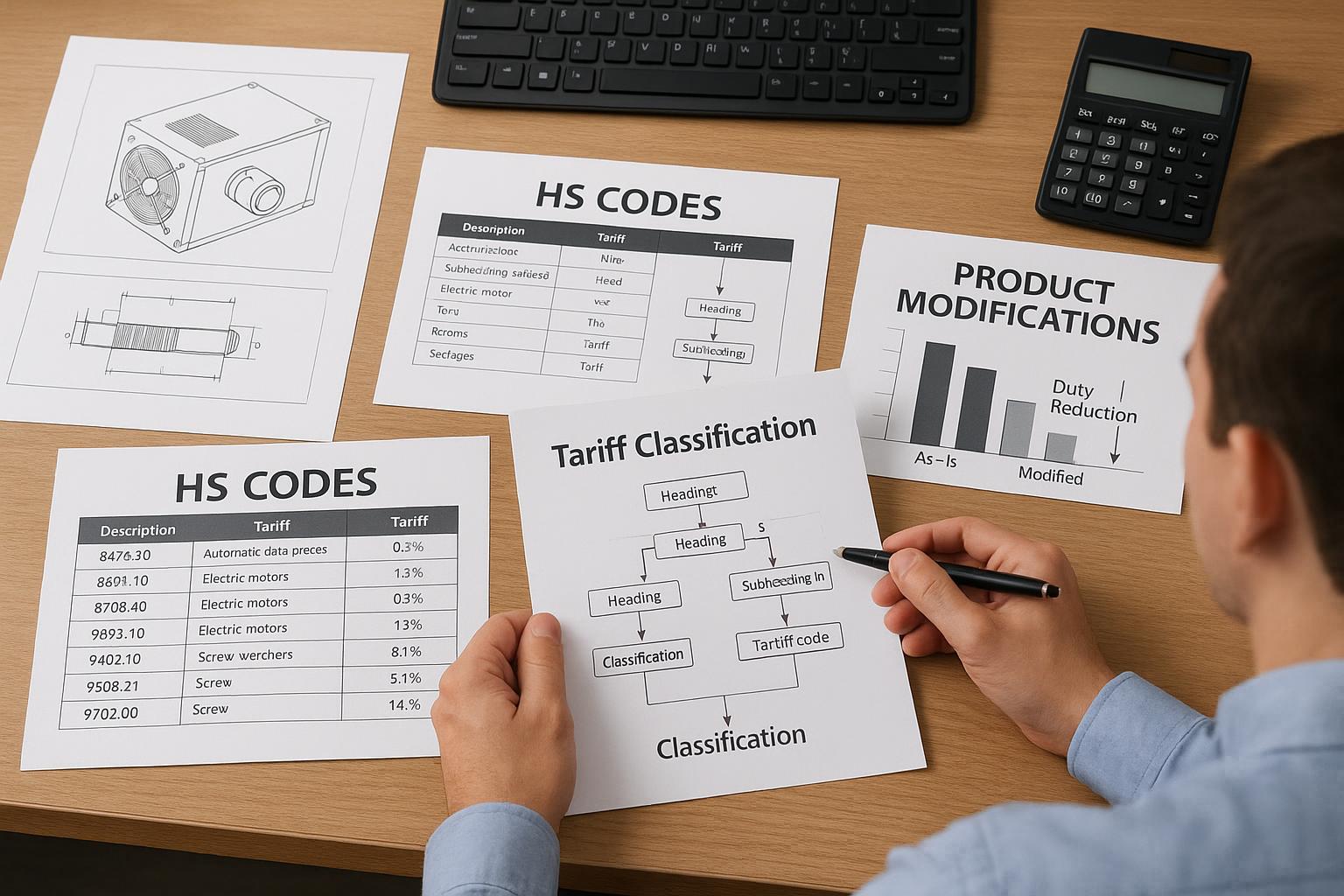
Tariff engineering is the practice of legally modifying products, supply chains, or transaction structures to minimize import duties and taxes. As global trade becomes increasingly complex and tariff rates fluctuate due to trade policies and geopolitical tensions, tariff engineering has emerged as a critical strategy for importers seeking to maintain competitive pricing and protect profit margins. According to Telesto Strategy, a supply chain consulting firm, tariff engineering helps companies legally minimize import duties by making strategic product modifications and supply chain adjustments. It is important to emphasize that tariff engineering is entirely legal when done properly and with full transparency to customs authorities. The key is understanding the rules and using them to your advantage while maintaining complete compliance with all applicable laws and regulations.
Material Substitution: Changing Product Composition
One of the most common tariff engineering strategies is material substitution, where companies replace components or materials in a product to achieve a more favorable tariff classification. According to Shapiro, a customs brokerage and logistics provider, companies use material substitutions by swapping out one component for another that falls under a lower duty rate. For example, a product that contains steel components might be redesigned to use aluminum or plastic components instead, potentially moving it into a different Harmonized System (HS) code with a lower duty rate. Sourcify, a sourcing platform, identifies changing component materials as one of five tariff engineering tactics that can save brands millions. The key to successful material substitution is ensuring that the changes do not compromise product quality or functionality. Additionally, any material changes must be accurately reflected in product descriptions and customs declarations to maintain compliance.
Shifting Final Assembly: Geographic Optimization
Another powerful tariff engineering strategy is shifting where final assembly takes place. According to Sourcify, shifting final assembly is a primary tariff engineering tactic that can significantly reduce duty costs. This strategy takes advantage of the fact that tariff rates often depend on the country of origin, which is typically determined by where substantial transformation occurs. For example, if you currently manufacture finished products in China and face high tariff rates, you might consider moving final assembly to a country with more favorable trade agreements, such as Mexico, Vietnam, or countries in the European Union. The key is ensuring that enough value is added in the new location to qualify for origin status under the applicable rules of origin. This strategy requires careful analysis of the rules of origin for your specific products and target markets, as well as consideration of the costs and logistics of establishing assembly operations in a new location.
First Sale Valuation: Multi-Tiered Transaction Optimization
First sale valuation is a sophisticated tariff engineering strategy that can significantly reduce duty costs for importers involved in multi-tiered transactions. According to U.S. Customs and Border Protection, the First Sale Declaration requires importers to declare to CBP when the value is based on a sale earlier than the last sale before entering the United States. Miller Chevalier, a law firm specializing in international trade, explains that the First Sale Rule uses the price of the first sale in multi-tiered transactions to determine tariff value, potentially lowering tariffs if certain conditions are met. For example, if a manufacturer in China sells goods to a middleman for $100, and the middleman then sells those same goods to a U.S. importer for $150, the importer may be able to use the $100 first sale price as the basis for calculating duties, rather than the $150 price they actually paid. This can result in substantial duty savings, particularly for products with high tariff rates. However, first sale valuation requires careful documentation and compliance with specific CBP requirements. As noted by Cozen O'Connor, a law firm, the first sale doctrine uses the price of the first sale in a series of transactions to calculate customs duties, potentially reducing import values and lowering tariffs with U.S. Customs. Mohawk Global, a customs brokerage, warns that CBP is enforcing stricter compliance standards for first sale valuation, requiring importers to maintain detailed documentation proving that the first sale was a bona fide transaction for export to the United States.
HS Code Optimization: Accurate Classification
The Harmonized System (HS) is a global product classification system that assigns numerical codes to traded goods. According to the U.S. International Trade Administration, the Harmonized System is a global product classification system, and to export, you will need to know the HS Code for your product. Your HS code determines not only your duty rate but also which trade agreements, quotas, and other regulations apply to your shipment. Flexport, a freight forwarder and customs broker, emphasizes that your HS codes determine your compliance, your admissibility, and which supply chain advantages you can capture. Many products can potentially be classified under multiple HS codes, each with different duty rates. Tariff engineering in this context means ensuring that your products are classified under the most favorable HS code that is legally defensible. This requires a thorough understanding of the HS classification system, the General Rules of Interpretation, and the specific characteristics of your products. Carbon6, a supply chain platform, notes that a system of numerical codes known as the Harmonized System, or HS codes, is used to classify and categorize goods that are traded between countries, making accurate classification critical for compliance and cost optimization. Thomson Reuters reports that AI-powered tools can now identify the likely HS code ranges for products in minutes, not hours, helping companies optimize their classifications more efficiently.
Dual Sourcing: Geographic Diversification
Dual sourcing is a tariff engineering strategy that involves sourcing the same product from multiple countries to take advantage of different tariff rates and trade agreements. According to Sourcify, using dual sourcing is one of the key tariff engineering strategies that can save brands millions. For example, you might source a product from both China and Vietnam, allowing you to shift volumes between suppliers based on current tariff rates, trade policies, and market conditions. This strategy provides flexibility and resilience in your supply chain while optimizing duty costs. However, dual sourcing requires careful management to ensure consistent product quality across suppliers and to maintain the documentation needed to support different country of origin claims. CLA Connect, a professional services firm, includes supplier relationships and geographic diversification among twenty tariff mitigation strategies available to manufacturers.
Other Duty Reduction Strategies
Beyond tariff engineering, there are several other legal strategies that importers can use to reduce duty costs. According to EP Logistics, a customs brokerage, duty reduction strategies for importers include Foreign Trade Zones (FTZs), duty drawback programs, and free trade agreements. Foreign Trade Zones allow you to defer, reduce, or eliminate duties on goods that are stored, assembled, or manufactured within designated zones. Duty drawback programs allow you to recover duties paid on imported goods that are subsequently exported or used in the manufacture of exported products. Free trade agreements provide reduced or eliminated tariff rates for goods that meet specific rules of origin requirements. Magnetic Precision, a manufacturing company, notes that changing product composition is one of the simplest methods of tariff engineering to alter the materials or components used in a product to achieve more favorable classification. CLA Connect's comprehensive list of tariff mitigation strategies also includes invoice splitting, VAT refunds, and transfer pricing optimization as additional tools for reducing overall import costs.
"Tariff engineering is not about evading duties—it's about understanding the rules and structuring your business to legally minimize costs while maintaining full compliance."
As global trade policies continue to evolve and tariff rates fluctuate, tariff engineering will remain an essential strategy for competitive importers. The key to success is working with experienced customs professionals who can help you identify opportunities, implement strategies, and maintain the documentation needed to support your approach. By combining tariff engineering with other duty reduction strategies and maintaining a commitment to compliance, you can significantly reduce your landed costs and improve your competitive position in the global marketplace.
References:
- Sourcify: 5 Tariff Engineering Strategies
- Shapiro: Understanding Tariff Engineering
- U.S. Customs and Border Protection: First Sale Declaration
- Miller Chevalier: Using the First Sale Rule
- Cozen O'Connor: The First Sale Doctrine
- U.S. International Trade Administration: HS Codes
- EP Logistics: Import Duty Reduction Strategies