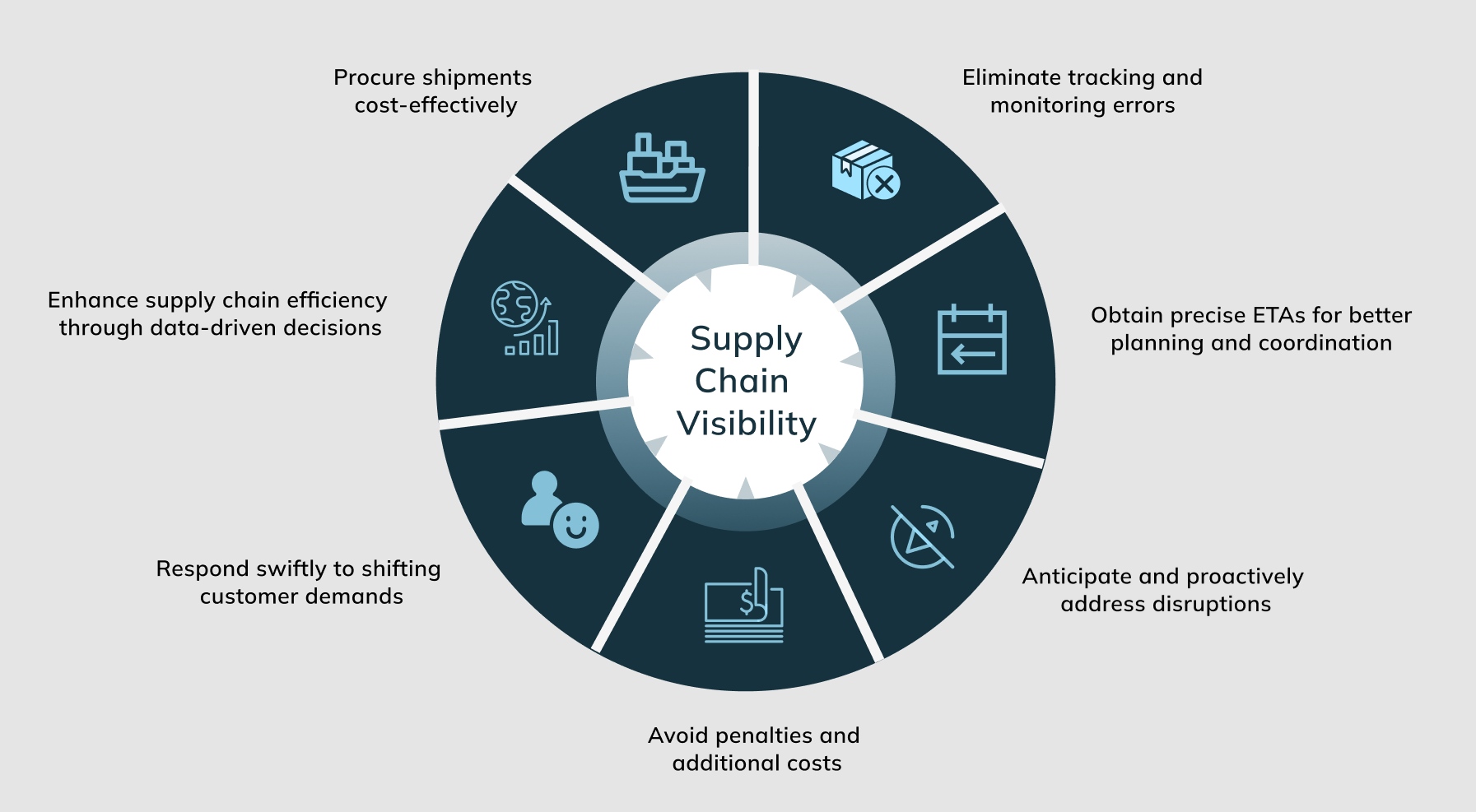
In today's volatile global market, supply chain visibility is no longer a luxury—it's a necessity. The ability to track products in real-time from the factory to the final destination allows businesses to anticipate disruptions, manage inventory more effectively, and improve customer satisfaction. As Forbes highlights, companies that invest in visibility platforms are better positioned to navigate challenges like port congestion, transportation delays, and geopolitical instability.
The Four Levels of Supply Chain Visibility
Supply chain visibility can be broken down into four levels, each providing a deeper level of insight. The first level is knowing where your products are at any given time. This is the most basic level of visibility and can be achieved through technologies like GPS tracking. The second level is knowing the status of your products, such as whether they are in transit, in a warehouse, or on a store shelf. The third level is understanding the condition of your products, such as their temperature or humidity levels. This is particularly important for perishable goods or products that are sensitive to environmental conditions. The fourth and most advanced level of visibility is understanding the 'why' behind any disruptions or delays. This requires a deep understanding of your supply chain and the ability to analyze data from multiple sources.
Technologies Enabling Visibility
Several technologies are driving the rise of supply chain visibility. IoT sensors provide real-time data on the location, temperature, and condition of goods. GPS tracking offers precise location data for shipments. Blockchain technology is also emerging as a powerful tool for creating a secure and transparent record of transactions across the supply chain. According to a report by IBM, blockchain can help reduce fraud, improve traceability, and streamline documentation. Other key technologies include AI and machine learning, which can be used to analyze data and identify patterns that would be difficult for humans to detect. For example, AI can be used to predict potential disruptions and recommend proactive solutions.
Benefits for Importers
For importers, the benefits of supply chain visibility are numerous. It allows for more accurate demand forecasting and inventory management, reducing the risk of stockouts or overstocking. It also enables proactive communication with customers about the status of their orders, which can significantly enhance the customer experience. Furthermore, in the event of a product recall or quality issue, a visible supply chain makes it much easier to trace the source of the problem and take corrective action. Other benefits include improved compliance with trade regulations, reduced transportation costs, and a more resilient supply chain.
Implementing a Visibility Strategy
To implement a successful visibility strategy, businesses should start by identifying their key visibility gaps. This may involve mapping the entire supply chain and identifying areas where information is lacking. Next, they should evaluate different technology solutions to determine which ones best meet their needs. It is also important to ensure that all supply chain partners are on board and willing to share data. As Supply Chain Dive points out, collaboration is key to achieving end-to-end visibility. This means establishing clear communication channels and data-sharing agreements with all of your suppliers, carriers, and other partners. It is also important to have a clear governance structure in place to manage the visibility program and ensure that it is meeting its objectives.
"You can't manage what you can't see. Supply chain visibility is the foundation of a resilient and agile supply chain."
By embracing technology and fostering collaboration, importers can gain the visibility they need to thrive in today's complex global trade environment. The investment in visibility is not just about mitigating risk—it's about creating a more efficient, responsive, and customer-centric supply chain.