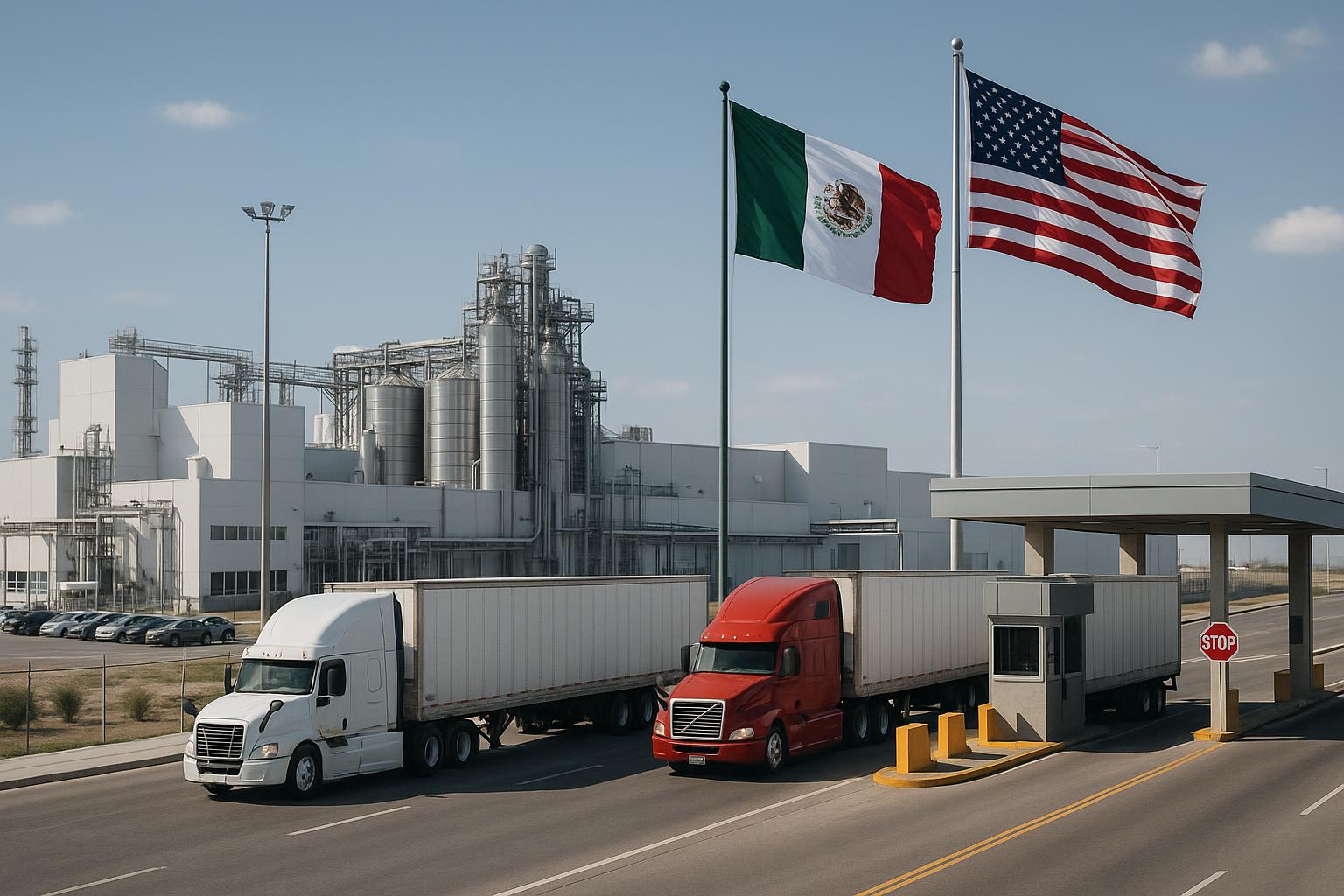
Nearshoring to Mexico has emerged as one of the most significant trends in global supply chain management. As companies seek to reduce their dependence on distant manufacturing hubs and build more resilient supply chains, Mexico has positioned itself as an attractive alternative to traditional offshore locations like China. According to Deloitte, nearshoring can help Mexico add an additional three percent to its GDP in the next five years, highlighting the magnitude of this shift. For U.S. companies, the benefits of nearshoring to Mexico are compelling: proximity to the U.S. market, favorable trade agreements, a skilled workforce, and reduced geopolitical risk.
The Proximity Advantage
One of the most significant advantages of manufacturing in Mexico is its geographic proximity to the United States. As Boston Consulting Group (BCG) points out, Mexico's unique advantage as a nearshore manufacturing platform is its 2,000-mile border with the U.S., with 48 road and five rail crossings. This proximity translates into shorter lead times, lower transportation costs, and greater supply chain flexibility. A shipment from Mexico can reach most U.S. markets in a matter of days, compared to weeks or even months from Asia. This speed to market is particularly valuable for industries with short product life cycles or rapidly changing consumer preferences. Additionally, the ability to visit manufacturing facilities more frequently and at lower cost enables better quality control and stronger supplier relationships.
USMCA: A Game-Changing Trade Agreement
The United States-Mexico-Canada Agreement (USMCA), which replaced NAFTA in 2020, has further strengthened Mexico's position as a nearshoring destination. The USMCA provides numerous benefits for companies manufacturing in Mexico, including duty-free access to the U.S. market for qualifying goods, streamlined customs procedures, and increased de minimis levels that reduce paperwork and costs for small shipments. According to the Office of the U.S. Trade Representative, the USMCA also includes provisions that support small and medium-sized enterprises (SMEs), facilitate digital trade, and strengthen intellectual property protections. For the automotive industry, the USMCA includes updated rules of origin that incentivize North American manufacturing and higher wages for workers. These provisions make Mexico an even more attractive location for companies looking to serve the U.S. market.
Cost Competitiveness
While labor costs in Mexico are higher than in some Asian countries, the total cost of ownership for manufacturing in Mexico is often lower when all factors are considered. According to NAPS International, a provider of manufacturing solutions in Mexico, when you factor in transportation costs, inventory carrying costs, quality issues, and the risk of supply chain disruptions, Mexico offers a more cost-effective solution than China for many products. Additionally, recent wage increases in China and the appreciation of the Chinese yuan have narrowed the labor cost gap between the two countries. Mexico also offers competitive costs for energy, land, and other inputs. Furthermore, the USMCA's tariff exemptions mean that goods manufactured in Mexico can enter the U.S. duty-free, providing significant cost savings compared to imports from countries that are subject to tariffs.
Skilled Workforce and Growing Manufacturing Expertise
Mexico has developed a highly skilled manufacturing workforce, particularly in industries such as automotive, aerospace, electronics, and medical devices. The country produces over 100,000 engineering graduates each year, providing a steady pipeline of talent for manufacturing operations. As highlighted by NovaLink, a provider of manufacturing solutions in Mexico, the country's workforce is not only skilled but also culturally aligned with U.S. business practices, making communication and collaboration easier. Many Mexican workers have experience working with U.S. companies and are familiar with U.S. quality standards and expectations. Additionally, Mexico's time zone alignment with the U.S. facilitates real-time communication and collaboration, which is a significant advantage over manufacturing in Asia.
Challenges to Consider
While nearshoring to Mexico offers many benefits, it is not without challenges. Security concerns in certain regions of Mexico can pose risks to operations and personnel. Companies must conduct thorough due diligence when selecting manufacturing locations and implement robust security protocols. Infrastructure limitations, particularly in transportation and logistics, can also be a challenge in some areas. Additionally, while Mexico's regulatory environment has improved in recent years, navigating local regulations and bureaucracy can still be complex. As noted by e2open, a supply chain software provider, companies should work with experienced partners who understand the local business environment and can help navigate these challenges. It is also important to have a clear understanding of the total cost of ownership and to conduct a comprehensive risk assessment before making the decision to nearshore.
Strategic Considerations for Nearshoring
Nearshoring to Mexico is not a one-size-fits-all solution. Companies should carefully evaluate their specific needs and circumstances before making the decision to nearshore. Key considerations include the nature of the product, the target market, the required level of customization, and the importance of speed to market. Products that are bulky, heavy, or have short life cycles are particularly well-suited for nearshoring. Additionally, companies that require frequent communication with their manufacturing partners or that need to make rapid changes to their products will benefit from the proximity and time zone alignment that Mexico offers. It is also important to consider the long-term strategic implications of nearshoring, including the potential for building a more resilient and agile supply chain.
"Nearshoring to Mexico is not just about cost savings—it's about building a more resilient, agile, and responsive supply chain."
As global supply chains continue to evolve, nearshoring to Mexico is likely to remain a key strategy for U.S. companies seeking to balance cost, quality, and risk. By carefully evaluating the benefits and challenges and working with experienced partners, companies can successfully leverage Mexico's advantages to build a more competitive and resilient supply chain.